
Dealert - Track Product Sales
Kevin ForemanShopping
3.861.00 Reviews
- Version
- 1.5.2
- Installs
- 10.00K
- Age Rating
- Everyone
Screenshots
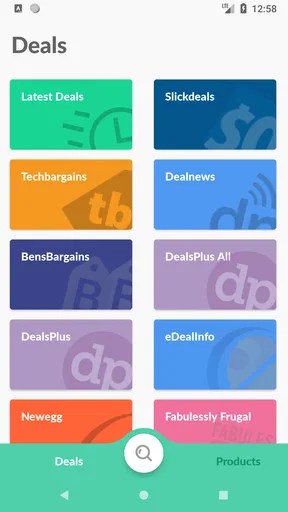
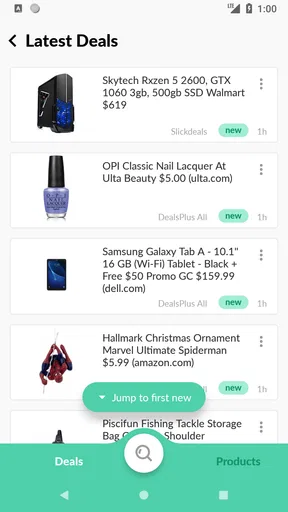
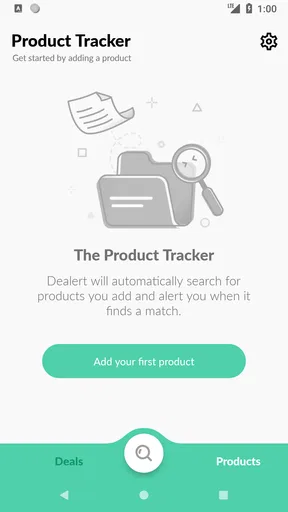
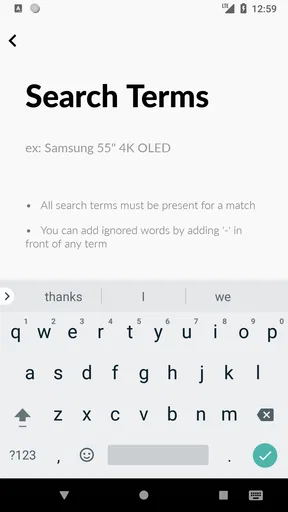
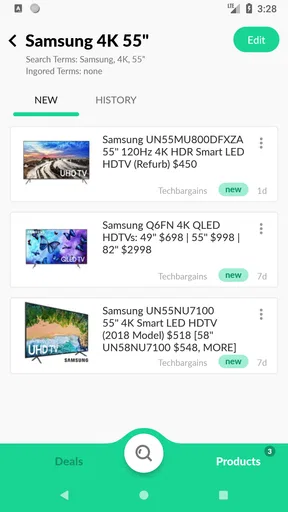
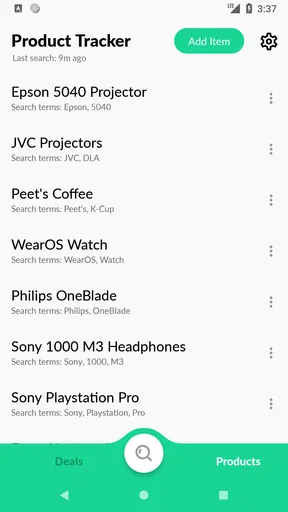
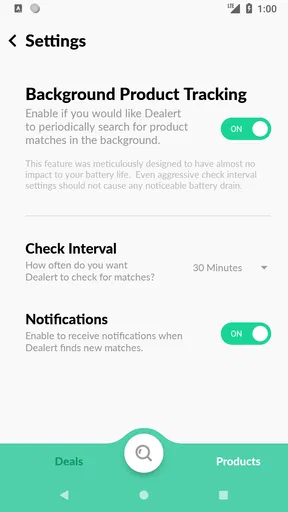
Our Review of Dealert - Track Product Sales
 Analysis by Appyee
I approached Dealert - Track Product Sales as a practical shopping companion rather than a full marketplace. Its purpose is simple: help me keep an eye on products and notice when their prices move into a more attractive range. That narrow focus is also the reason it can be useful. Instead of repeatedly searching the same product page, I can use a dedicated place to organize the deals I care about and return when I am ready to buy.
The app comes from Kevin Foreman and is free to install, with optional in-app purchases priced at $4.99 per item. It is listed for Everyone, runs on Android 6.0 and later, and the current version is 1.5.2. Those details make it accessible to a wide range of Android users, including people using older phones that may not run newer shopping tools comfortably.
My overall impression is that this is best suited to patient shoppers. If I need an item immediately, a normal retailer app or a price-comparison search is usually faster. If I am willing to wait for a worthwhile reduction, however, a tracker can change the buying process from repeated checking into a more deliberate routine. That difference is where this app makes the most sense.
How the app feels during ordinary price tracking
I find ordinary price tracking works best when I decide what would make a product worth buying before I start watching it. That small step turns a changing price into a useful signal rather than a reason to check repeatedly, and it also gives me a clear way to prune items that no longer fit my plans. Next, I’d look at the practical choices that shape how much confidence I place in a tracker.
A focused approach instead of another shopping catalog
The first thing I noticed about the concept is its restraint. Dealert is not trying to replace every store, product search engine, or checkout service on my phone. Its role is closer to a watchlist for sales. That makes the experience easier to understand: I use it when I already have a product in mind and want to avoid paying the highest price simply because I happened to shop on the wrong day.
This is particularly useful for purchases that are important but not urgent. I might want a replacement accessory, a household item, or a piece of technology while still being willing to wait. In that situation, a tracker gives me a reason to postpone the purchase without losing sight of it. The practical benefit is not just finding a lower price; it is reducing the temptation to buy immediately out of convenience.
The short store description, “Dealert,” does not explain much by itself, but the longer promise of avoiding missed deals captures the intended workflow. I would not treat the app as a place to browse endlessly. I would treat it as a small personal list of buying opportunities that deserve attention later.
Where it can feel quick
For a light user, the app should feel naturally quick because the task is narrow. I am not asking it to manage a large shopping account, compare every retailer on the internet, or load a visually heavy product catalog. A focused tracker has an advantage here: fewer decisions and fewer screens can make the simple actions feel direct.
That perceived speed matters most when I am adding a product I have just discovered. If I see an item during normal browsing, the ideal workflow is to record it promptly and return to what I was doing. A tracker becomes much less useful when saving a product requires too much sorting, typing, or repeated navigation. For that reason, I would keep my watchlist intentional rather than adding every interesting item I encounter.
There is also a useful distinction between app speed and deal speed. The interface may be easy to open and use, but the value of the service depends on waiting for a meaningful price change. Someone expecting instant savings may mistake the app’s purpose. Its strongest performance is measured by how well it supports a waiting strategy, not by how quickly it turns every visit into a purchase.
What happens during heavier use
Heavy use for this kind of app is less about demanding graphics and more about the number of products and checking habits involved. A small, carefully selected list is likely to be easier to manage than a long collection containing products I no longer want. I would divide my saved items mentally into three groups: things I need soon, things I would buy at the right price, and items I am only curious about.
That simple separation is one of my most useful practical tips. It prevents a crowded tracker from becoming another neglected list. When many products are saved without any priority, a genuine deal can blend into old entries. Keeping only realistic candidates makes the app feel more responsive from a human point of view, even if the technical workload has not changed.
A second useful habit is to decide the acceptable price before watching an item. Without that limit, I can see a reduction and still hesitate because I have no clear standard. Writing down a target in my own notes, or simply deciding it before adding the product, turns the app into a decision aid rather than a source of endless browsing.
The trade-off is that a focused tracker may not satisfy someone who wants a complete shopping dashboard. Users who compare shipping, seller reputation, delivery estimates, coupons, and stock at the same time may prefer a retailer’s own application or a broader comparison service. Dealert’s value is strongest when the central question is, “Has this product become cheap enough for me?”
Reliability depends on the complete buying chain
I would judge the app’s reliability in two layers. The first is whether it remains useful as a personal deal list. The second is whether the price information leads me to a purchase that still makes sense. Those are not identical. A lower displayed price may not be the final cost after shipping, taxes, seller changes, or product variations, so I would always verify the item before paying.
This is not a criticism unique to Dealert; it is a basic rule for price tracking. A product can have several versions that look almost identical while differing in size, storage, color, condition, or included accessories. When a tracked price looks attractive, I would open the original shopping destination and check the exact variation. The app can help me notice an opportunity, but I should still confirm the details at checkout.
Recovery is another part of reliability that deserves attention. If I stop using the app for a while, I would not assume every saved item remains equally relevant. Products change, sellers change, and my own priorities change. A short review of the list after a break is worthwhile. Remove items that are no longer needed, recheck the product identity, and keep the list limited to purchases I would genuinely make.
That recovery routine is more important than it sounds. Many tracking tools fail in everyday use because the user’s list becomes stale, not because the original idea is poor. Dealert works better when I treat it as an active shopping shortlist rather than a permanent archive.
Older Android phones are part of the appeal
The minimum requirement of Android 6.0 makes the app approachable for people who do not own a recent phone. That is a meaningful advantage in a category where some shopping applications increasingly assume newer hardware or newer operating-system features. I could consider it on an older compatible device without immediately needing to upgrade the phone first.
At the same time, compatibility alone does not guarantee an identical experience on every device. Older phones may have tighter memory limits, slower storage, or more aggressive background restrictions. I would keep expectations realistic: a lightweight shopping utility should be easier to accommodate than a large visual marketplace, but the phone itself can still affect opening time and how smoothly screens change.
Battery and resource use are also worth considering in practical terms. A deal tracker is not an app I need to leave open continuously. I would check it when shopping, review saved products at convenient moments, and avoid treating it like a constantly active shopping feed. That approach reduces unnecessary phone activity and keeps the app’s role clear.
For someone using a newer Android device, the minimum operating-system requirement is unlikely to be a concern. For someone using an older compatible phone, I would install it with a modest watchlist first. That gives me a chance to see how comfortably it fits the device before moving all my shopping habits into it.
Who will benefit most from it?
The best match is a shopper who already knows what they want but does not need it today. This could be someone furnishing a home gradually, replacing equipment before it fails, or waiting for a sale on a product that is too expensive at its usual price. The app adds structure to that waiting period.
It can also help people who tend to forget products after seeing them once. Instead of relying on browser tabs, memory, or screenshots, I can put the item into a dedicated shopping workflow. That is especially helpful when I am comparing several possible purchases over a few weeks and do not want to restart the research process each time.
A realistic everyday scenario would be planning a household purchase before a busy month. I might find the right product early, save it, decide the maximum amount I am comfortable spending, and then check the tracker during my normal shopping routine. If the price becomes acceptable, I verify the exact listing and make the purchase. If it does not, I have lost little time because I was not repeatedly searching from scratch.
The app is less suitable for bargain hunters who want a constant stream of newly discovered promotions. It is also not the obvious choice for urgent purchases, where availability and delivery matter more than waiting for a price movement. In those cases, a retailer app, a local store search, or a conventional comparison tool may provide a more complete and immediate answer.
How it compares with familiar alternatives
The usual alternative is simply to search the product again whenever I remember it. That method costs little to set up, but it depends heavily on memory and discipline. A dedicated tracker is more useful when I have several products to monitor or when the purchase may take weeks. It turns repeated searching into a list-based habit.
Another alternative is a retailer’s own application. Retailer apps are usually better for inventory, delivery, order history, loyalty benefits, and checkout. They may be the better choice when I already know the store where I will buy. Dealert has a different advantage: it encourages me to think about the price before committing to a particular shopping trip.
Price-comparison services are stronger when I want a broad view of competing sellers at this exact moment. They can be more efficient for immediate research. Dealert is more appealing when my question is longitudinal: has this item reached a better buying point than before? That distinction helps me decide which tool to open instead of expecting one app to do every shopping job.
I would also compare it with browser bookmarks and notes. Those options are flexible, but they are not designed around deal awareness. A note can hold a product name and a target price, yet it still requires me to remember to check the listing. Dealert’s dedicated purpose makes the reminder process more intentional, even though I should still maintain the list myself.
Free access and the paid choice
The free price lowers the barrier to trying the app with a few products. I would begin with items I am genuinely considering rather than importing a large wish list. That approach lets me judge whether the tracking routine fits my shopping behavior before spending anything.
Optional purchases cost $4.99 per item, so I would think carefully about which tracked products justify that expense. The sensible way to evaluate it is against the expected saving and the importance of the purchase, not against the excitement of seeing a possible deal. A small saving may not justify paying for tracking, while a meaningful reduction on an expensive item could make the calculation different.
Because the purchase is described per item, I would be especially selective. I would not use paid tracking for products I am unlikely to buy, items with rapidly changing specifications, or purchases where another store already offers a clear price. I would reserve it for products with a realistic target and a genuine willingness to wait.
What the current adoption says to me
The app has passed ten thousand installs and holds a 3.8 average from 131 ratings, alongside 61 written reviews. I read that as a sign of a small but established audience rather than evidence that it is a universal shopping standard. The rating is neither an automatic endorsement nor a reason to dismiss it; it suggests that the experience may depend heavily on whether the user’s shopping habits match the app’s focused purpose.
That modest scale also shapes my expectations. I would approach Dealert as a specialized utility from an individual developer, not as a giant retail ecosystem with every shopping service built in. Kevin Foreman’s app is easier to understand when judged on whether it helps me organize and revisit deal opportunities, rather than on whether it can match the breadth of major shopping platforms.
My performance verdict after considering the full workflow
Dealert - Track Product Sales makes the most sense as a quiet, focused assistant for delayed purchases. Its likely strengths are the simplicity of the idea, broad compatibility through Android 6.0 support, and a workflow that can reduce repeated product searches. It does not need to dominate my phone to be useful; it only needs to help me remember what I want and recognize when the timing looks better.
The main friction is behavioral. I still need to curate the list, verify product details, consider the final purchase cost, and decide whether a price is truly worthwhile. People looking for instant bargains, complete retailer tools, or a broad live comparison may be happier elsewhere. The optional per-item cost also means I should avoid paying for every casual interest.
For me, the strongest recommendation is conditional: try the free version with a small number of deliberate targets, use a clear spending limit for each one, and review the list regularly. If that routine saves me from impulse purchases or repeated searching, the app earns its place. If I mostly buy immediately or prefer one retailer’s complete shopping experience, it will probably feel unnecessary.
In short, I see this shopping app as a practical waiting tool rather than a destination for browsing. Used selectively, it can make patient buying easier and more organized. The best results come from combining its tracking role with my own final checks on the exact product, seller, and total cost. That is a sensible balance for anyone who wants to catch a better deal without turning every purchase into a full-time research project.
Verdict
Strengths of Dealert - Track Product Sales
- Tracks product sales and deal prices in one convenient place.
- Useful for comparing discounts before making a purchase.
- Clean interface makes browsing offers quick and simple.
- Can help identify price drops on selected products.
- Saves time by keeping sales information organized.
Limitations of Dealert - Track Product Sales
- Deal availability may vary by region or retailer.
- Price information can become outdated between updates.
- Some products may have limited details or missing images.
- Notifications could become excessive for frequent shoppers.
- The app’s usefulness depends on the retailers it supports.
Similar Picks in This Category
View All
SHEIN-Shopping Online
Roadget Business PTE. LTD.4.8

Amazon Shopping
Amazon Mobile LLC4.4


Mercado Libre: Compras online
Mercado Libre4.8

Wish: Shop and Save
Wish US Holdings LLC4.7

Alibaba.com - B2B marketplace
Alibaba Mobile4.4
Frequently Asked Questions
What is Dealert - Track Product Sales used for?
Dealert - Track Product Sales is designed to help users monitor products, follow price changes, and identify sales or discount opportunities. It can be useful when you are waiting for a lower price before buying something, comparing offers over time, or checking whether a promotion is genuinely attractive. The app’s usefulness may depend on the stores, products, and regions it supports.
How does Dealert - Track Product Sales notify me about price drops?
After selecting or adding a product, Dealert can monitor its listed price and alert you when a relevant change occurs, depending on the app’s tracking features and supported retailers. Notifications may require permission to be enabled in your device settings. Keep in mind that prices, stock availability, shipping fees, and promotional conditions can change quickly, so an alert should be treated as a helpful indication rather than a guarantee of the final purchase price.
Does Dealert support every online store and product?
No price-tracking application can normally cover every retailer, marketplace, or product available online. Dealert’s coverage may vary according to the stores integrated into the service, the country where you use it, and the way each retailer publishes product information. Before relying on the app, check whether your preferred stores and products can be found and tracked. Some links or prices may also require verification on the retailer’s website.
Is Dealert - Track Product Sales free to download and use?
Dealert may be available to download without an upfront charge, but the exact experience can depend on the current version, region, and any optional premium features. Some services use advertising, subscriptions, or in-app purchases to support advanced tracking or remove limitations. Review the app’s store listing carefully before installing, especially the subscription terms, renewal conditions, and available trial period, if one is offered.
Is it safe to use Dealert for shopping and product tracking?
Dealert is primarily intended to help with product discovery and price monitoring, but users should still take normal precautions when shopping through any deal-tracking service. Verify that the final link leads to the legitimate retailer, check the seller’s reputation, and review shipping, return, warranty, and payment details before ordering. Also examine the app’s requested permissions and privacy policy so you understand what information may be collected or shared.
